Can You Negotiate Repairs After a Home Inspection? Yes — Here’s How
Yes, you can negotiate repairs after a home inspection. The inspection gives you a factual list of issues, and your purchase contract's inspection contingency gives you the right to ask the seller to fix them, credit you at closing, or lower the price. Smart buyers focus on real defects, not cosmetic quirks.
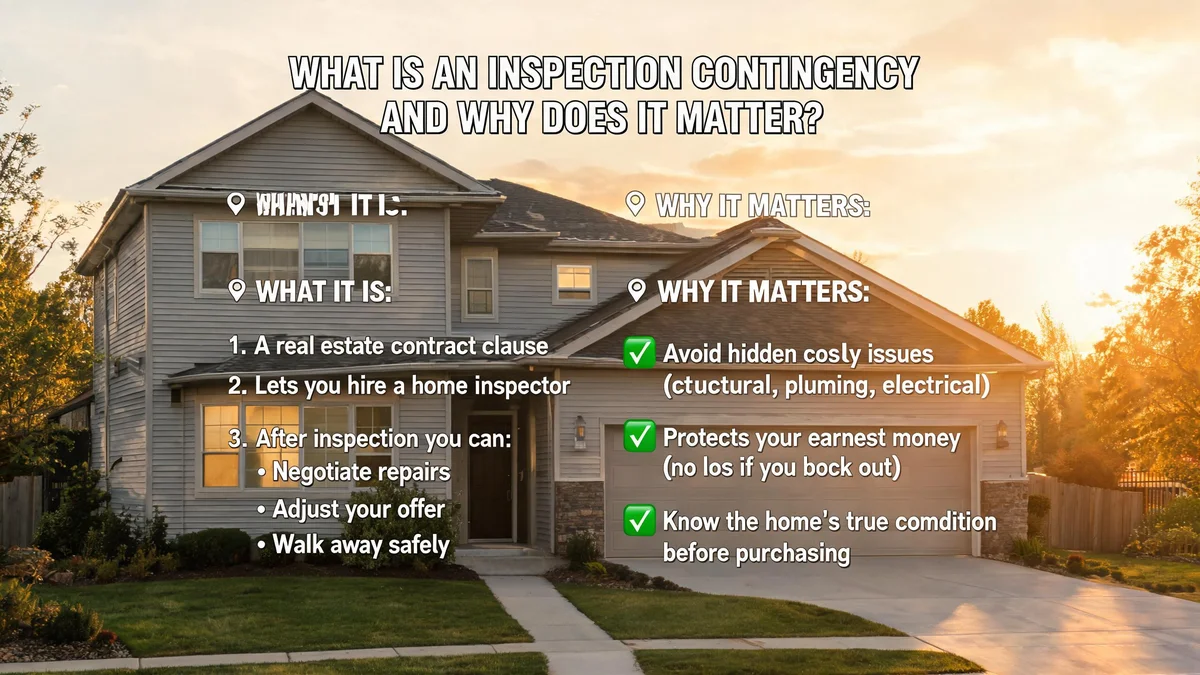
What Is an Inspection Contingency and Why Does It Matter?
An inspection contingency is a clause in your purchase agreement that lets you have the home professionally inspected and then request repairs or back out of the deal based on the findings. It typically lasts 5 to 10 business days in most contracts, meaning the clock starts ticking the moment the offer is signed.
This contingency is your main source of leverage. Without it, your offer is a promise to buy the house as-is, no matter what the inspection uncovers. With it, you have a window to renegotiate terms or walk away with your earnest money intact.
How to Negotiate After a Home Inspection

Start by reading the inspection report with a highlighter and a cold eye. Not every finding matters. Focus on health, safety, and structural issues: active leaks, electrical hazards, roof failures, foundation movement. Cosmetic flaws rarely move a seller, and asking for them can poison the negotiation.
Before you write one word to the seller, get repair estimates from licensed contractors. A specific number lands harder than a vague complaint. For example, if the inspector flags a damaged roof, a quote for $9,500 of shingle work gives the seller something concrete to respond to. You do not need five bids, but one or two solid estimates make you look serious and organized.
Then decide what you want: repairs completed by licensed pros, a closing cost credit, a price reduction, or some combination. Sellers often prefer credits because they avoid scheduling work and do not have to warranty the fix. You may prefer repairs because you want the problem solved before you own it.
What Repairs Should a Seller Pay For?
Safety hazards top the list. Faulty wiring, broken stairs, missing handrails, a missing smoke alarm in a bedroom, or a garage door infrared sensor that is incorrectly located all fall here. A missing anti-tip bracket on a range is a cheap fix — typically $100 to $300 — but it prevents a tip-over injury, so it is a legitimate ask.
Code violations and active water intrusion are also solid ground. A leaky bathtub connection in a crawlspace, downspouts that dump water against the foundation, or a water heater missing its PTR valve extension are all things a reasonable seller should address. Active water leaks in particular tend to worsen fast, so sellers often agree to fix them rather than risk a deal falling through.
Structural and systems issues — roof replacement, furnace failure, foundation cracks — are the biggest asks. A whole-roof replacement runs $8,000 to $25,000, so that becomes a major negotiation point. You may not get the whole roof, but a seller might cover the repair or credit a portion.
What Repairs Are Usually Not Negotiable?
Cosmetic issues are yours to fix. Paint colors, worn flooring, outdated fixtures, and minor scuffs stay off the repair request. Sellers view these as visible wear you priced into your offer.
Minor drywall cracks and slight driveway settling also rarely justify a request. These are common, often cosmetic, and do not threaten the structure. The same goes for small chips in tile or a screen door that sticks. Save your leverage for items that affect livability or safety.
Ask yourself: would a reasonable person walk away over this? If not, leave it off the list.
How Do You Write a Repair Request Letter?
Keep the repair request letter short and factual. Reference the inspection report by date and page or section number for each item. Then state exactly what you want and attach the contractor estimate.
For example: "Per the inspection report dated June 3, page 14, item 2: active water leak at bathtub connection in crawlspace. Requested action: repair by licensed plumber and provide receipt. Estimated cost: $900." Repeat this for each requested repair, and close with a deadline for the seller's response — typically 2 to 3 business days.
Do not threaten, lecture, or include a wish list of 40 minor items. A tight list of 5 to 10 serious defects is more persuasive than 30 nitpicks.
What If the Seller Refuses to Make Repairs?
You have three options: accept the home as-is, negotiate a credit at closing, or walk away with your earnest money. The inspection contingency protects your deposit if you act within the deadline.
A seller credit typically ranges from 1% to 3% of the purchase price for repairs. On a $400,000 home, that is $4,000 to $12,000. The credit lowers your cash to close, freeing up money to fix the furnace or roof yourself after closing. But keep in mind that some repairs, like a failed septic system, may make the home unmortgageable — and a credit will not solve that.
If the seller refuses everything and will not budge, walking away is sometimes the right call. A structural defect you cannot afford to fix is a better reason to lose inspection costs than to own a money pit.
FAQ
Can you negotiate price after home inspection?
Yes. You can ask for a price reduction instead of a repair. The negotiation follows the same rule: base the number on concrete contractor estimates, not a round guess.
What repairs are mandatory after a home inspection?
No repairs are legally mandatory in most states. However, your lender may require certain fixes before funding the loan, such as a leaking roof or missing safety equipment like smoke detectors. Appraisal conditions can also force repairs.
How long does a seller have to respond to a repair request?
Most repair addendums give the seller 2 to 5 business days to respond in writing. Your purchase contract sets the deadline. If they miss it, your agent should follow up in writing to keep the contingency alive.
Do sellers have to fix everything on a home inspection report?
No. The inspection report is informational. Sellers negotiate repairs, and they often agree to some items while declining others. You cannot require them to fix everything, and trying often backfires.
Can a buyer back out after home inspection?
Yes, within the inspection contingency window. If the findings are severe and you did not waive the contingency, you can cancel the contract and get your earnest money back. After the window closes, you lose that right.
Is it better to ask for repairs or a credit at closing?
It depends. If you need the work done immediately and do not have cash after closing, ask for repairs. If you want control over the contractor and timing — or the seller is moving far away — a credit is often cleaner. A credit also avoids fights over the quality of the seller's fix.
Not sure how your findings stack up? Many buyers upload their inspection PDF to a plain-English analyzer to get severity, cost ranges, and next steps in minutes.
Feeling overwhelmed by your inspection report?
Upload your PDF and get a plain-English breakdown: top issues, severity, estimated repair costs, and next steps.
Analyze my report