
10 Common Home Inspection Red Flags First-Time Buyers Miss
You found a house you love, the offer got accepted, and now the inspection report lands in your inbox. Some findings are minor. Others are home inspection red flags that signal bigger, costlier problems hiding behind the walls, under the floors, or up in the attic. Here are the ones first-time buyers most often overlook — and what to do when you spot them.
What Are the Most Common Home Inspection Red Flags?
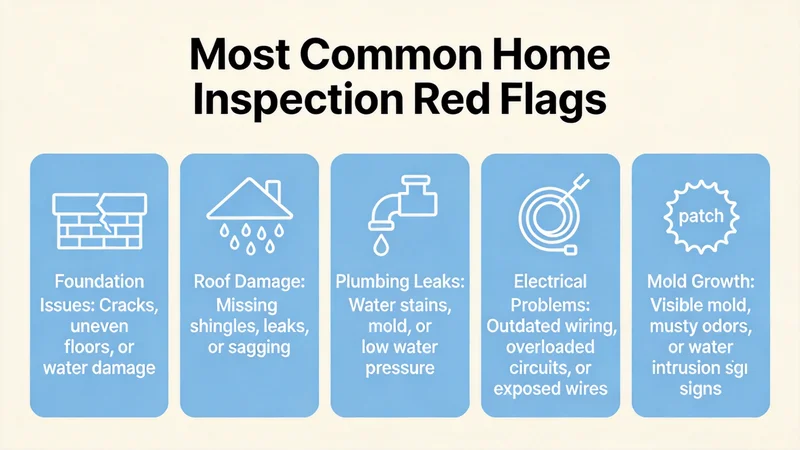
A red flag is any defect that points to a larger systemic issue, not just an isolated cosmetic flaw. A cracked tile in the bathroom is annoying. A foundation crack running horizontally across the basement wall? That's a structural concern that can cost thousands. Red flags fall into a few buckets: safety hazards like missing smoke alarms or exposed wiring, moisture issues that lead to mold and rot, and structural problems that threaten the home's integrity.
Why Do First-Time Buyers Overlook Major Inspection Findings?
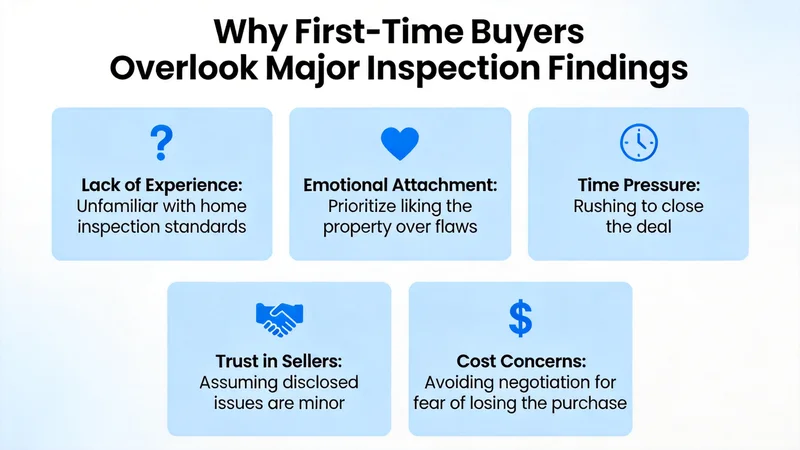
You've been picturing your furniture in the living room for three weeks. That emotional attachment makes it easy to skim past phrases like "active water leak at bathtub connection" or "deteriorated exterior wood trim." Sellers also stage homes strategically — a fresh coat of paint covers water stains, area rugs hide cracked floors, and furniture blocks access to problem corners. The inspection report is your unvarnished look at the house. Read every line.
10 Home Inspection Red Flags You Should Never Ignore
1. Foundation cracks wider than 1/4 inch or horizontal cracks
Hairline vertical cracks are common as concrete cures and settles. Cracks wider than a quarter inch, stair-step cracks in brick, or any horizontal crack along a foundation wall suggest serious movement. Horizontal cracks especially mean soil pressure is pushing the wall inward. Repair costs run $500–$10,000 depending on the type and severity — and if there's active movement, you need a structural engineer before moving forward.
2. Water stains on ceilings, walls, or basement floors
A brown ring on the ceiling isn't a paint issue. It's evidence of past or ongoing water intrusion. Check the disclosure and ask when the roof was last replaced (full replacement: $8,000–$25,000). Stains near windows or baseboards often point to failed seals or drainage problems. If the seller painted over stains, look for fresh paint in isolated patches — that's a tell.
3. DIY electrical work or outdated panels
Federal Pacific and Zinsco electrical panels are known fire hazards and many insurers won't cover homes with them. Panel replacement runs $1,500–$5,000. Open junction boxes, reversed polarity outlets, low voltage at outlets ($150–$600 per outlet), and missing GFCI protection near water sources ($100–$250 per outlet) are all red flags. Bad DIY wiring isn't just against code — it's dangerous.
4. Missing or disconnected downspouts
Downspouts that dump water next to the foundation invite basement leaks and erosion. The fix sounds cheap ($50–$500) but the damage it prevents is not. If you see water accumulation on walkways against the foundation ($500–$3,000 for regrading) or signs of efflorescence on basement walls, take it seriously.
5. Deteriorated roof components
Missing tiles ($300–$1,500), curling shingles, and rotted fascia or trim ($800–$4,000) mean the roof's protective layer is failing. The roof is your first line of defense against everything else on this list. An inspector can't always see what's under the shingles — if the report flags roof concerns, a roofer's second opinion is worth the service call.
6. Active plumbing leaks
A leaking pipe under a sink is cheap to fix ($200–$1,500 per leak). But an active water leak at a bathtub connection in the crawlspace, or a toilet separating from the floor ($200–$600), can mean hidden moisture, rot, and mold behind walls. Moisture attracts termites too. Treat any active leak as urgent.
7. High water pressure
This one rarely makes the "scary" list but shouldn't be ignored. Pressure above 80 psi stress-tests your pipes, appliance connections, and fixtures. The fix is a pressure regulator, typically $300–$900 installed. Skip it and you'll be chasing leaks and premature appliance failures for years.
8. Crawlspace and basement moisture
Standing water, high humidity, or visible mold in a crawlspace means the vapor barrier has failed or drainage is poor. Encapsulation runs $3,000–$12,000 for the full space. Mold remediation adds $500–$6,000 per affected area. If you catch it early, a sump pump ($600–$1,500) plus improved grading may solve the problem.
9. Missing safety devices
Missing smoke alarms ($20–$100 per unit), no carbon monoxide detectors ($50–$300), and a missing anti-tip bracket on the range ($100–$300) are cheap fixes. But they signal neglect. If the seller didn't install basic safety devices, what else did they skip? A garage door safety beam mounted too high ($100–$400) is another common one — and a serious injury hazard for kids and pets.
10. HVAC and water heater age and condition
An inspector can't predict when an old furnace will die, but they'll note its age, condition, and performance. A pinched duct restricting airflow ($200–$800) or an unsecured AC condensing unit ($150–$500) are early warnings. Budget for replacement if the furnace is past its typical lifespan ($4,000–$12,000) or the water heater is nearing its end ($1,200–$3,500).
What Issues Fail a Home Inspection?
Home inspections don't technically pass or fail. They're informational. But some findings are deal-killers in practice: active foundation movement, severe mold, unsafe electrical panels (Federal Pacific or Zinsco), collapsed sewer lines, and extensive termite damage ($300–$3,000 for treatment alone, not counting structural repairs). Any issue that costs more than you're willing or able to spend, or that the lender's appraiser flags as a health and safety issue, can stop the deal cold.
How Should You Respond to Home Inspection Problems?
Start by sorting findings into three buckets: safety hazards, high-cost items, and deferred maintenance. Safety items like missing carbon monoxide alarms should be fixed before closing — period. For high-cost items like a failing roof, you have three negotiation levers: ask the seller to repair before close, request a credit at closing, or lower the purchase price. Sellers often prefer credits over doing repairs themselves. Get contractor quotes so you're negotiating from real numbers, not guesses.
Can You Buy a House with Major Defects?
Yes, but with your eyes open. When the inspection reveals foundation cracks, call a structural engineer ($500–$10,000 repair range, depending on type). For electrical issues, bring in a licensed electrician. For water stains, a roofer or mold specialist. If you love the house and the seller won't budge, renovation loans like FHA 203(k) or Fannie Mae HomeStyle roll repair costs into your mortgage. That lets you buy the house and fix the red flags without draining your savings.
FAQ
What are common home inspection red flags?
Foundation cracks over 1/4 inch or horizontal, water stains anywhere, outdated electrical panels, active plumbing leaks, missing safety devices, and moisture in basements or crawlspaces. These signal bigger issues beyond the visible defect.
What issues fail a home inspection?
No inspection technically fails, but major defects kill deals: active foundation movement, unsafe panels like Federal Pacific or Zinsco, severe mold, waste line failures, and roof systems beyond repair. Lenders may refuse financing until these are fixed.
Can you negotiate after home inspection?
Yes. Use the inspection findings as leverage. Request the seller repair major defects, credit you at closing, or reduce the price. Sellers usually negotiate rather than restart the listing process.
How much do home inspection repairs cost?
It depends entirely on the finding. Repair costs range from $20 for a missing smoke alarm to $25,000 for a full roof replacement. Foundation crack repair runs $500–$10,000, electrical panel replacement $1,500–$5,000, and mold remediation $500–$6,000. Always get multiple quotes.
Should I walk away after a bad home inspection?
Walk away when the repair estimate exceeds your budget, the defects are structural and the seller won't negotiate, or the home's systems are deferred beyond what you can handle. Trust the numbers, not your emotions.
Is foundation crack a deal breaker?
Not always. Vertical hairline cracks are rarely serious (repair: $500–$1,500). Horizontal cracks or ones wider than 1/4 inch suggest structural movement and can cost up to $10,000. Get a structural engineer's assessment before deciding.
Not sure how your findings stack up? Many buyers upload their inspection PDF to a plain-English analyzer to get severity, cost ranges, and next steps in minutes.
Feeling overwhelmed by your inspection report?
Upload your PDF and get a plain-English breakdown: top issues, severity, estimated repair costs, and next steps.
Analyze my report